July 28, 2025: Ayers Rock Resort (Author: J)
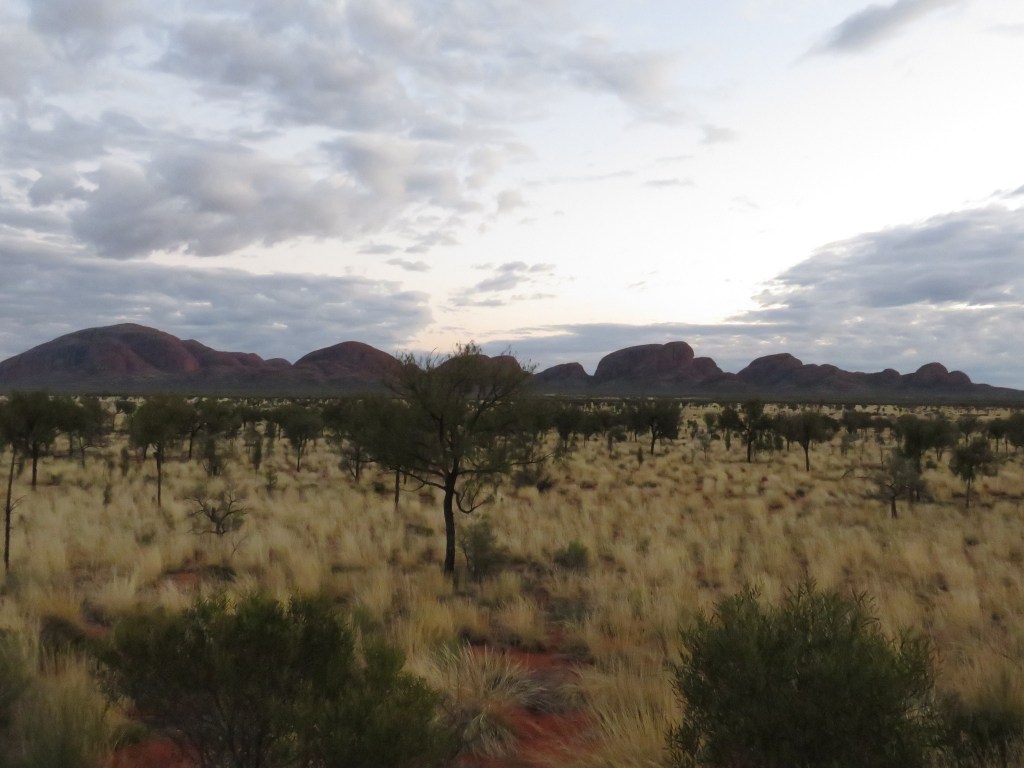
Day 12 of our trip was another early start, this time at 5:55 am for a sunrise visit to Kata Tjuta. This tour was offered through Uluru Hop on Hop Off Bus. But, unlike the Uluru bus, the Kata Tjuta bus does not run regularly throughout the day. Instead, they run a sunrise and a sunset bus to Kata Tjuta. This arrangement makes sense given the relative popularity of Kata Tjuta and Uluru; lots of people seem to visit just the latter. However, there are drawbacks to this arrangement that prevent me from recommending Uluru Hop on Hop Off for a trip to Kata Tjuta. The reasons for this will become apparent as I describe our adventure.
Like our other activities at Ayers Rock Resort, the confirmation for the bus specified that we should be at the bus stop in front of the hotel 10 minutes before embarkation time. Not wanting to get up any earlier than necessary, we packed our day bag – including a breakfast of muffins and juice boxes – the night before. When our alarm went off at 5:20 am, we dressed, brushed our teeth, grabbed our bags, and made the short walk across the property to the bus stops in front of the lobby.
The bus arrived a little after 6 am. Therein followed the same confusion and digging in pockets we had witnessed the previous morning. (The top tip here is to have your park pass ready for any activity that takes you into Uluru Kata Tjuta National Park.) A little more than 30 minutes after boarding the bus, we pulled up to a viewing platform overlooking Kata Tjuta. This time we were early enough to see the sky change colors as the sun rose and lit up the rock formation. It was worth getting out of bed for.
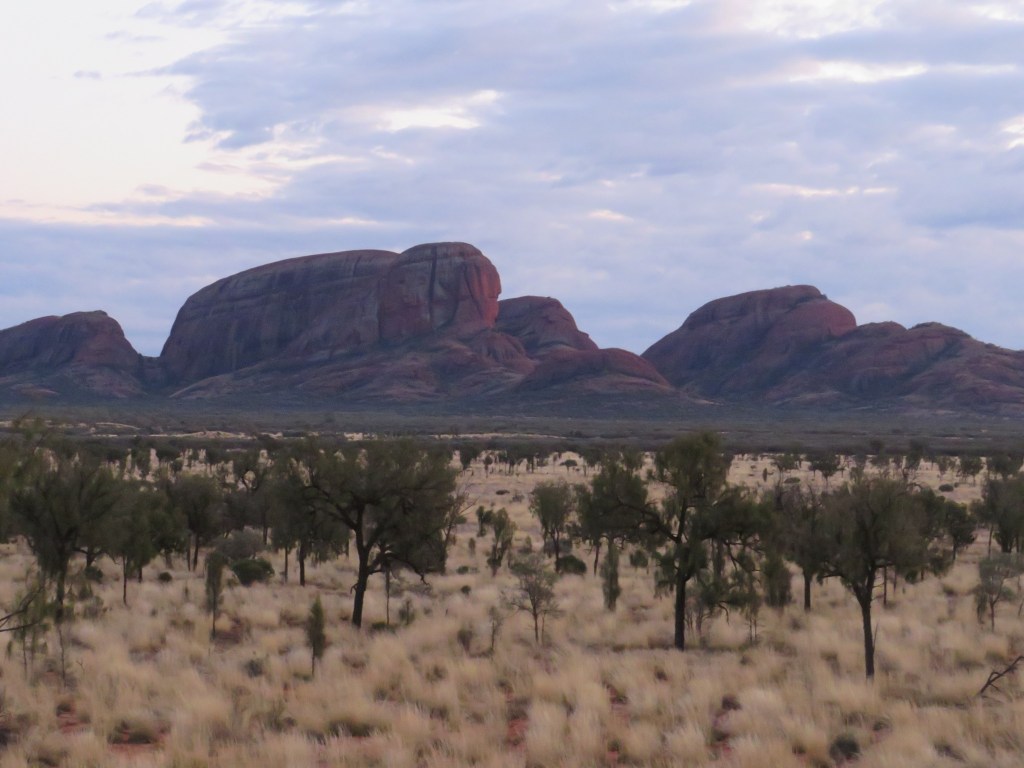
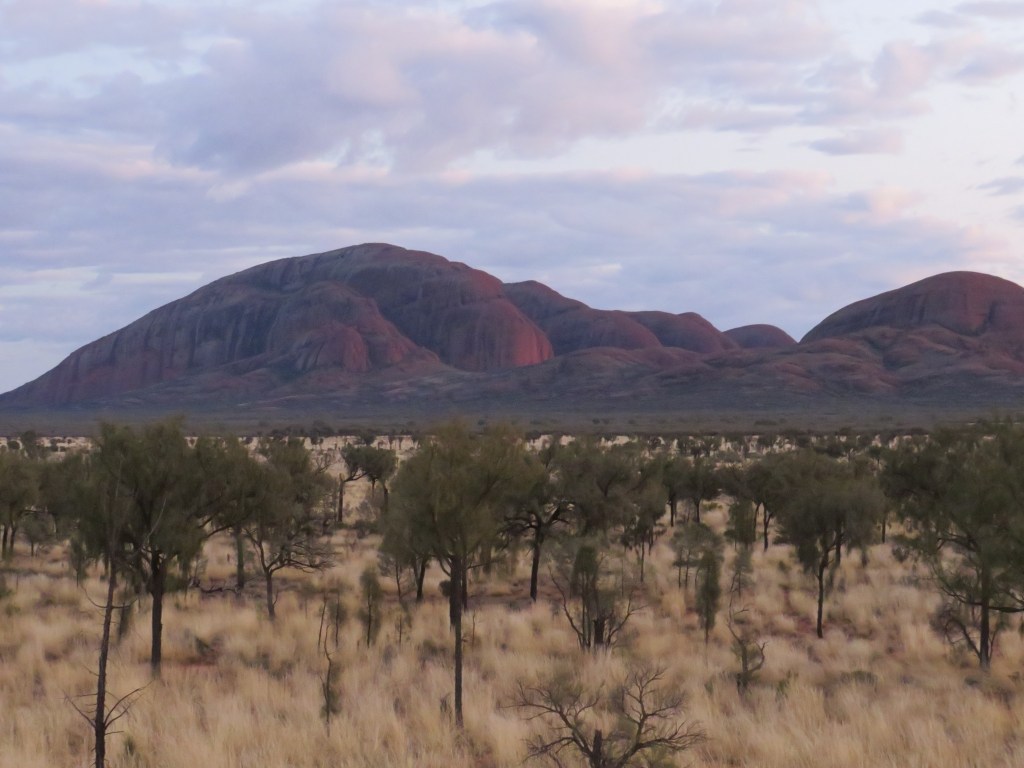
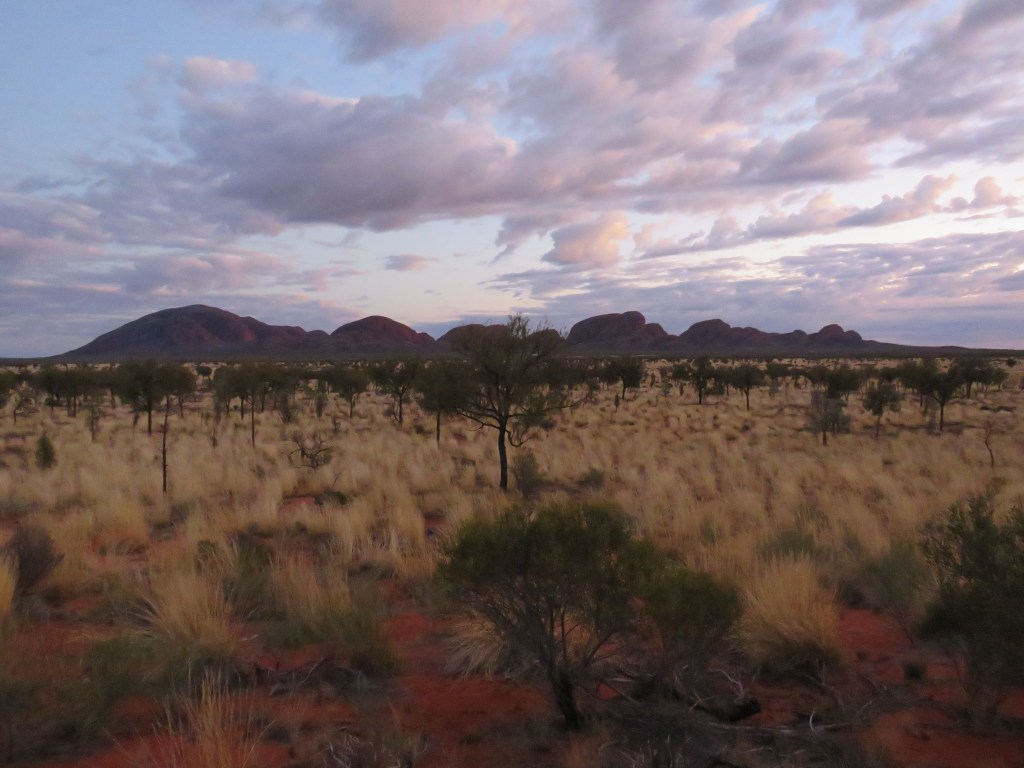
There were plenty of other tour buses and cars at the viewing platform, but it is large enough that we didn’t feel crowded. We were able to take pictures, enjoy our muffins, and move around to take in the different views of the 30+ rocks in the formation. When it was officially “sunrise,” we shuffled back to the bus for our next stop: a bathroom break.
Our driver dropped us at the restrooms with instructions to ignore the “men” and “women” signs on the doors and use whichever bathroom had the shorter line. Everyone dutifully disregarded his instructions and queued up according to the sign directions. (In fairness, I don’t think it made much of a different because the lines were long for both restrooms). While I was waiting in line at the women’s room, a park worker walked over to the bathroom door, removed the “women” sign, and replaced it with “men.” “Evens out the toilet paper use,” he said with a wink. Somewhere in the US, a politician tossed and turned in his sleep. In Australia, I waited in line, used the bathroom, and then met P and D back at the bus.
After taking care of business, we had the choice between completing the Walpa Gorge Walk or the longer Valley of the Winds Walk. We opted for the latter. The driver dropped the first group of people at the Walpa trailhead and then briefed everyone else on the Valley of the Winds. The gist was that we had 3 hours to complete the walk, which was plenty of time for literally any human, and that if we didn’t make it back to the bus 3 hours and 15 minutes after we were dropped off, we would be abandoned in the National Park. After we got off the bus at the trailhead, the driver briefed us on how to use the emergency intercom at the trailhead, something that we needed to know because cell phone service is spotty at Kata Tjuta. He helpfully explained that missing the bus would not be a suitable reason to use the emergency intercom.
We started our hike by taking a photo of the trail map, which described the Valley of the Winds as a “moderately challenging 3-4 hour hike.” “We can always hitchhike back to the hotel if we miss the bus,” I reassured myself. “After all, what are the odds that anyone would kidnap a group of hitchhikers – I mean – other than that one famous Australian serial killer who kidnapped groups of hitchhikers….”
I kept those thoughts to myself as we set off on the first leg of our hike. Unlike the flat trail around Uluru, the hiking at Kata Tjuta is uneven and sometimes steep. The trails allow you to walk between some of the rocks in the formation. Even so, the first leg of the hike to Karu Lookout is a fairly easy 1 kilometer or so. We reached the lookout in about 30 minutes, took in the views, and then pressed on.
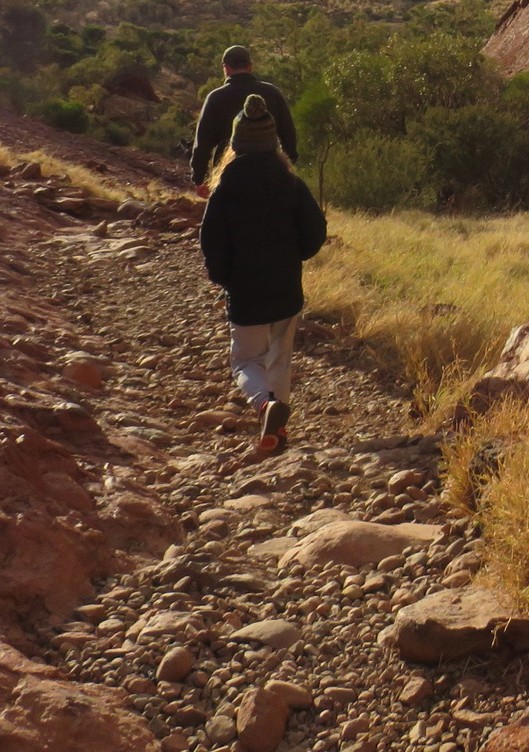
The next stop was Karingaṉa lookout. Getting there was more of a challenge because the trail was narrow with loose rocks. We didn’t have ideal footwear for those trail conditions – just regular sneakers – so we needed to pick our way carefully over the tricky places on the trail. It was during this portion of the hike that I noticed a pain in my left foot. I ignored it and pressed on.
A little over an hour after starting our hike, we reached the 2nd lookout. The views there were spectacular. There was also a sign that indicated that photography was restricted because it was a culturally sensitive area. I found the sign somewhat unclear. Was all photography prohibited? Just certain views? I decided to err on the side of not taking any photos from the lookout (and minimal photos after that). Hopefully, none of my photos are inappropriate.
At the Karingana lookout, we had a decision to make: finish the loop or turn around and go back the way that we came. Based upon the recommendation of a guide who was hiking with a group of 20-something backpackers, D advocated for finishing the loop. This option was advertised as longer but more flat. P and I weren’t sold, but we went along with the recommendation. It was a mistake.
It took us a little less than 2 hours to complete the rest of the loop, which included some steep portions. Because the trail didn’t have a lot of markers, we didn’t have a good way to assess our progress. We therefore kept a fairly punishing pace, stopping only when the pain in my foot became more than I could handle. (It turned out that I had a small splinter of wood in my sock, which had cut my toe. Without the 2 women from our bus who stopped to offer me a bandage, I’m not sure that I would have made it).
After all that, we made it back to the drop-off point with about 10 minutes to spare. Our bus started back towards Ayers Rock Resort precisely on schedule, and presumably carrying everyone who had purchased a ticket. But only our driver — and anyone he may have left behind — knows for sure.
So, who is the Uluru Hop On Hop Off – Kata Tjuta Sunrise Return tour good for?
- Very fit people who prefer not to look around while hiking;
- Moderately fit people who don’t mind a 50 km walk back to Ayers Rock Resort after their hike; and
- People of any fitness level who don’t mind pushing the emergency call button even though being abandoned by your bus is “not a real emergency.”
Who isn’t the Uluru Hop On Hop Off – Kata Tjuta Sunrise Return tour good for?
- People of any fitness level who like to hike at a leisurely pace admiring their surroundings;
- Unfit people;
- People with mobility issues;
- People with young children;
- Anxious people;
- People who didn’t pack hiking books to save weight on their luggage;
- People who prepare for vacation by listening to podcasts about famous serial killers from their travel destination;
- People whose 12-year-old sons are likely to hold a grudge about completing a 3-4 hour hike in less than 3 hours to avoid being abandoned by a tour bus; and
- People with a little splinter of wood in their left shoe.
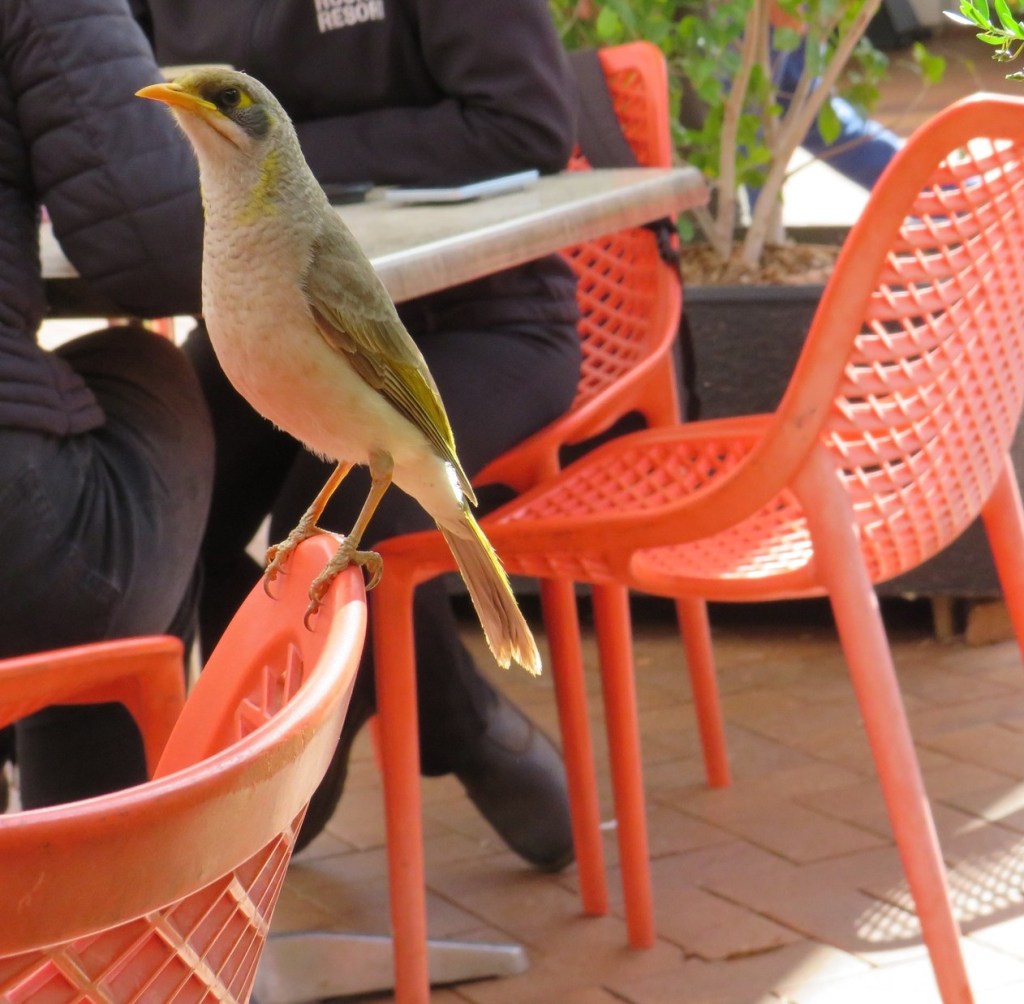
After our hike, we walked directly to Ayers Rock Resort Town Square for lunch. We selected Kulata Academy Café because our first choice, Ayers Wok, was only open for dinner. Kulata Academy Café had assorted sandwiches and baked goods. We all chose the halloumi and roasted tomato sandwich, and D and P also purchased some donuts. It was a beautiful afternoon, so we ate outside in the company of various colorful, mooching birds. After lunch, we went back to our room (which had been cleaned that morning based upon my request to the front desk the day before) to relax.
Our plans that evening were to attend Wintjiri Wiru Twilight. This is a sunset wine, cheese, and dessert reception overlooking Uluru, followed by a laser and drone show. The show tells the Mala story, which is the story of how the Mala people journeyed to the Uluru area. Our pickup time for the show was 6 pm. We were surprised to see someone from the resort already checking people in when we arrived at the bus stop at 10 minutes to 6. As it turned out, her purpose was to confirm whether anyone wanted to cancel or rebook. Because of wind conditions, there was a good chance that the drones could not fly. It was our last night at Uluru, so we chose to keep our booking.
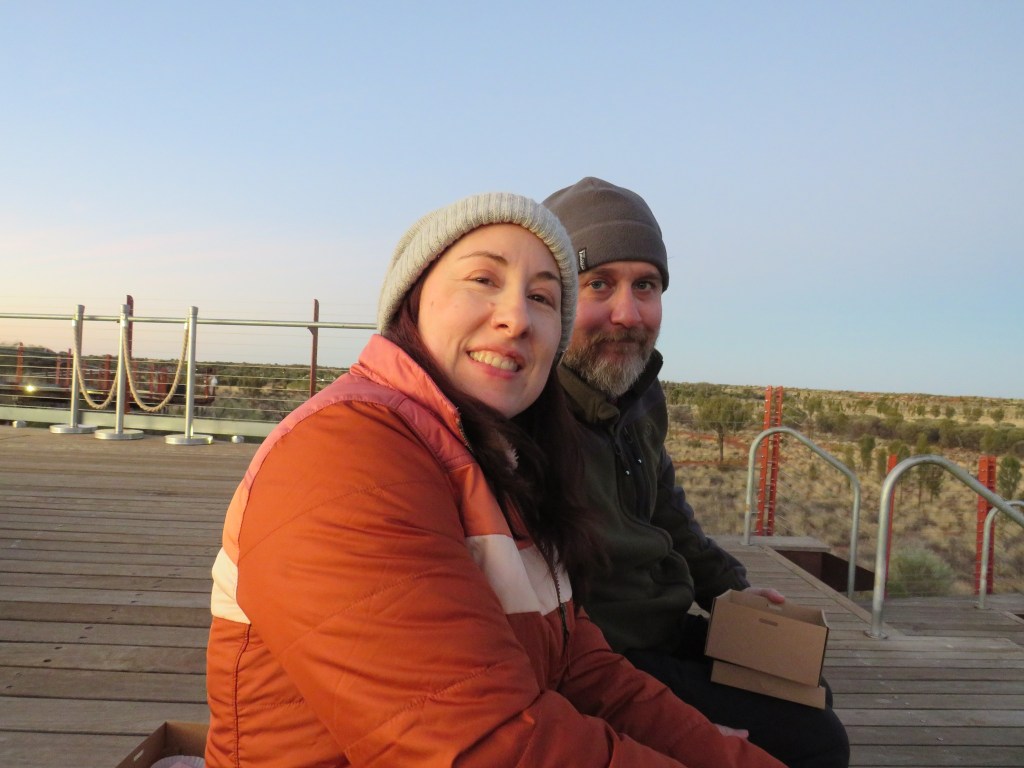
Wintjiri Wiru takes place on a large platform overlooking Uluru. It has stadium riser type seating and an area behind it with a bar and some cocktail tables. When we arrived, there was already a group seated and eating a meal. They were the “Sunset Dinner” group. Our wine, cheese, and dessert option was approximately $100 AUD per person cheaper. On arrival, our group was greeted with a selection of wine, beer, and soft drinks. Shortly after that, we each received a box of food. The adult box contained a few types of cheese, some grapes, fruit paste, assorted crackers, and a little cake. The kids’ box had just one type of cheese, grapes, apples, crackers, teddy bear cookies, popcorn, and a little cake. Given our late lunch, it was plenty of food.
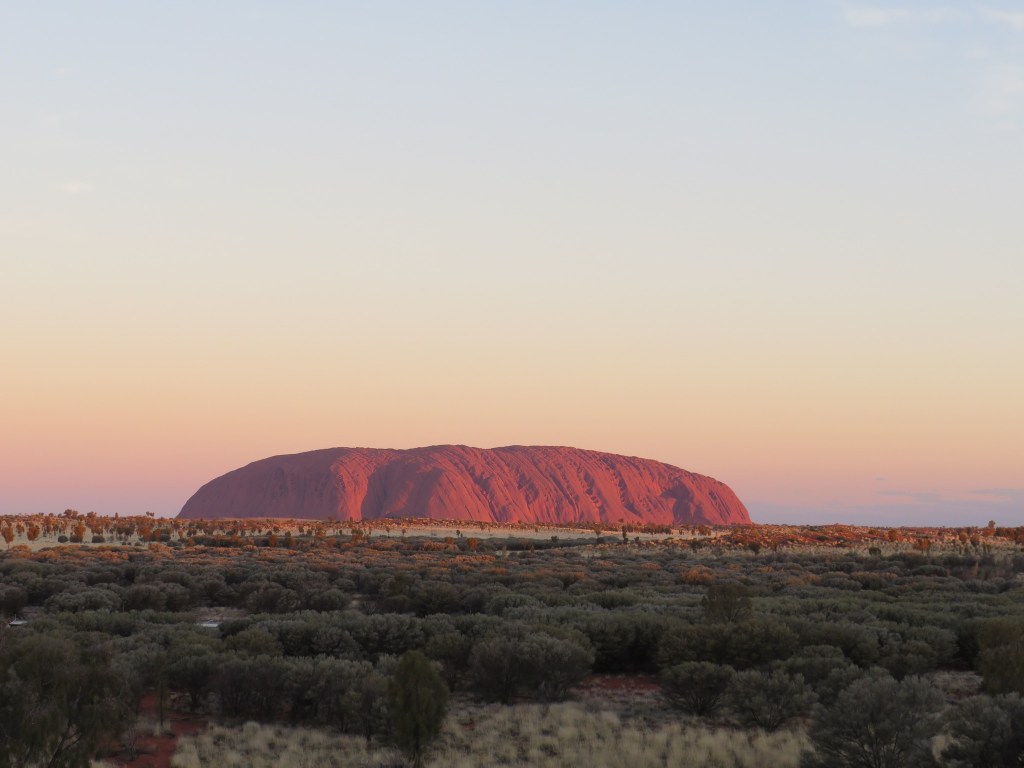
While we were eating and watching the sun set over Uluru, the staff did some wind tests to see if the drones could safely be flown. Unfortunately, the final verdict on that was no. We were treated, instead, to a laser and music show (and a fairly substantial partial refund because of the drone show cancellation). D and I enjoyed the experience and would recommend going even if there is a risk that the drones will be cancelled. The sunset was beautiful, the wine was unlimited, and the laser show was relaxing. P, on the other hand, was very disappointed that we had scheduled Wintjiri Wiru for the one evening of our trip that the drone show did not occur.
My lessons learned from this day were: 1) Kata Tjuta is definitely worth seeing; 2) if you would like to see Kata Tjuta without self-driving, spend the money for a guided hike and the peace of mind that you won’t be left behind at the Valley of the Winds trailhead; and 3) book Wintjiri Wiru on your first night so that there is the option to reschedule if the winds are strong.

