May 15, 2021: Napo (Author: J)
Another day at Napo, another early wake up. The plan for the day was to visit two clay licks and the Kichwa Añangu community. That required hitting the river as early as possible because we needed to paddle out to the welcome center and transfer to the larger motorized canoe in time to see any parrots that might visit the first clay lick.
After breakfast, we had a pleasant trip to the welcome center, including spotting more monkeys along the banks of the river. Unfortunately, it was clear that a storm was developing. By the time we reached the welcome center, it had started to drizzle. And once we were in the motorized canoe, the rain began to pick up. Although the bad weather made it unlikely that any parrots would visit the clay lick, we set out in that direction to look for a jaguar that had been spotted along the banks of the river. The prospect of seeing such an elusive animal was exciting enough that we forgot about the bad weather for a minute. But, sadly, the jaguar remained hidden in the foliage and we did not catch a glimpse of him.
Since we were already out on the river, we headed in the direction of the clay licks. As was to be expected given the weather, there were no birds to be seen. We gave up on the first clay lick and headed to the community. The Kichwa Añangu community, which owns Napo, has a cultural center in their village where lodge guests can learn about the traditional way of life in the Amazon and see some of the projects that the lodge supports, which include schools and a medical center. In non-pandemic times, families from neighboring communities send their children to be educated at the community schools. The community also operates a second lodge in the community that focuses on cultural activities, but that lodge is not operating during the pandemic.
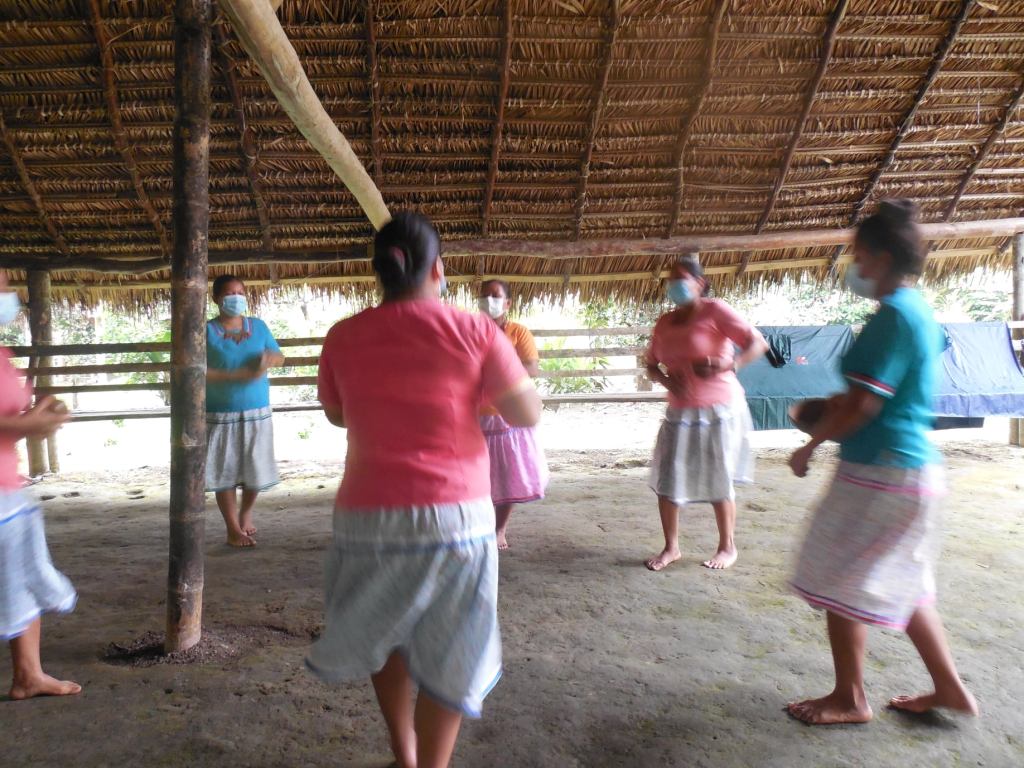
The first stop of our village tour was to watch a dance by the community’s women’s club. We also had the opportunity to try some of the traditional instruments. Unfortunately, P became very upset because one of the drums was made of monkey skin and he refused to participate in the dancing. (I would assume that the drum was at least 20 years old because the community relinquished their hunting rights when they founded Napo in order to ensure abundant wildlife and attract eco-tourists).
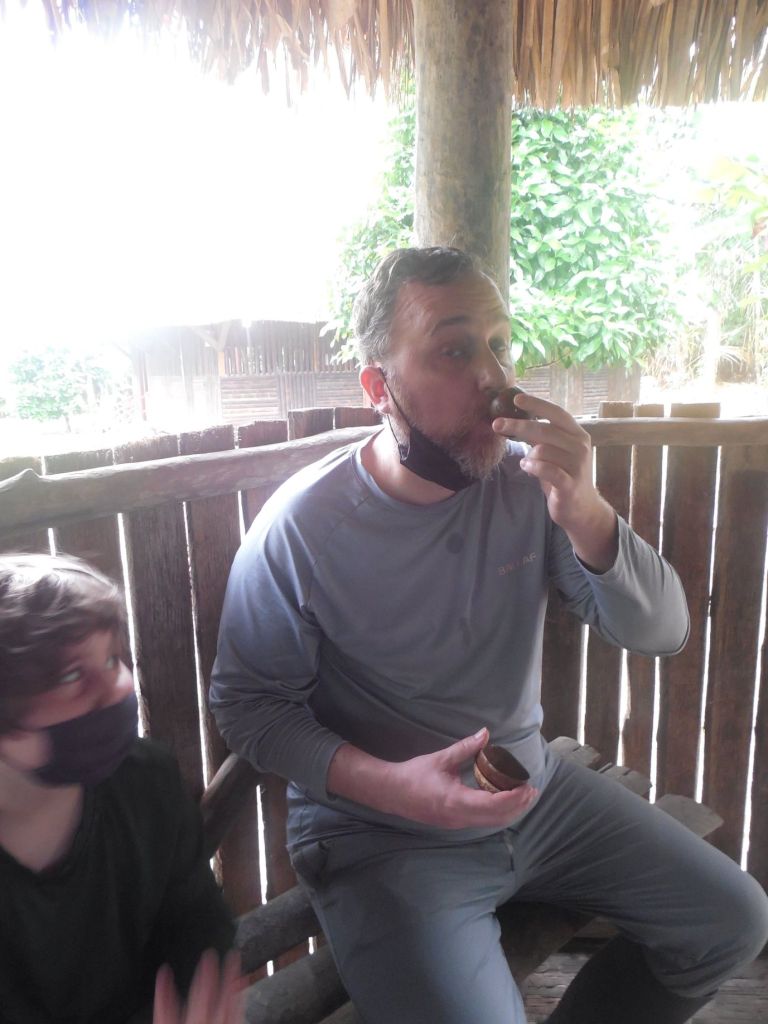
After the welcome dance, we moved to a recreation of a traditional home to try some of the traditional foods of the community. We started with a tea-like drink called Guayusa and then moved on to foods that were more unusual to us, including grubs and chicha, a fermented corn drink. I did my best to eat the grub, but I found it too meat-like after years of vegetarian eating. (Technically, it is meat, I suppose). I wound up taking a small nibble and then slipping the rest in my pocket out of fear I would offend our hosts by rejecting food. In the same spirit, D drank all of the chicha. It reminded me of a very sour yogurt drink and P and I were satisfied with just a small sip.
Finally, we visited a shop where handicrafts made by members of the women’s club were for sale. I was surprised at how large the shop was and the wide variety of items for sale. Since we were travelling with only carry-on luggage, we chose a few small items — jewelry and some wood carvings –and then spent some time browsing the rest of the collection.
It was David’s hope that the rain would clear at some point, allowing us to visit the second clay lick. For that reason, we returned to the traditional home to try to wait out the rain. With the cultural activities over, there was not much to do but watch the sky with anticipation. Unfortunately, the rain continued through to lunch time and David made the difficult call that there would be no clay lick excursion. Instead, we piled back into the motorized canoe and returned to the welcome center for lunch.
When we were told that we would be eating at the welcome center, I expected something simple, like sandwiches. Instead, we were treated to a full buffet of hot food items and a cooler of beer and sodas. We ate in a small, covered pavilion that was apparently designed for lunch service on days when guests do the clay lick excursion. There were several points during lunch where I thought that I could almost see the sun, but it never quite broke through the clouds. Indeed, by the time we were ready to return to the lodge, the rain had picked up again. For the second time, we had a wet and uncomfortable canoe ride back to lodge. I was so soaked when we finally arrived that I did not even stop to enjoy the welcome drinks that the bartender had prepared for our group. I just ran past him, shouting apologies about wet pants.
Back at our cabin, we decided to give the jacuzzi tub a second try. D went to the main building to ask for matches so that we could light the citronella diffuser and I cleaned all the dead bugs out of the tub. Then we started the long process of filling the tub. (Perhaps I have exaggerated it in my mind by this point, but I remember it taking over 30 minutes to fill the tub). D returned with environmentally friendly matches. Unlike regular matches, they pose no risk of starting a forest fire because it is impossible to light them. We went through the entire box, breaking every match. At the end, we had an unlit diffuser and a pile of unlit matches.
After a short dip in the tub, P and I got dressed in dry clothing and headed to the lobby with books and cameras in hand. Our plan was to read and keep an eye out for any animals that might appear when the rain finally stopped. We enjoyed more drinks from the bar while waiting and P posed for portraits by two college-aged twins who were studying art in school. (One of them drew him as a terrifying green thing and the other as a middle-aged man; P preferred the non-zombie portrait).
Our optimism that the rain would clear was not rewarded. After two hours, we gave up and went back to the cabin to take a break before our planned night hike. Unfortunately, the hike was cancelled when the rain continued right on into the evening.
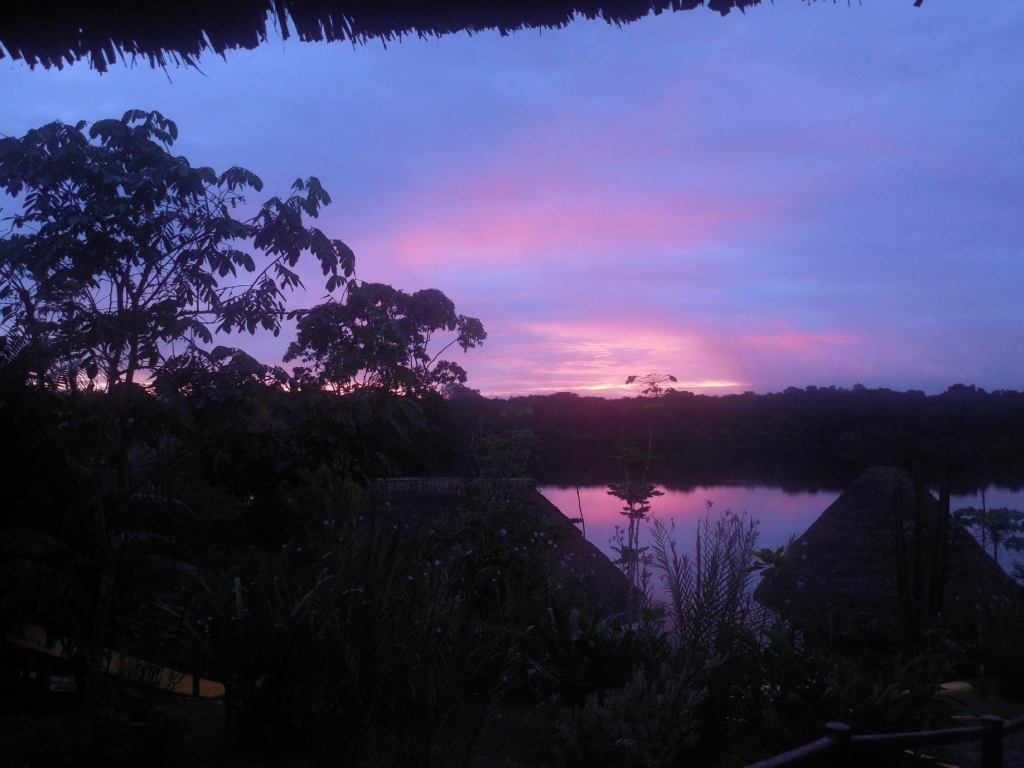
At dinner, I asked David if it was usual for it to rain all day in the Amazon. He confirmed that wash outs were rare, but said that we would likely have clear skies the next day after so much rain. We also asked where we could best spot certain monkey species and we were sad to learn that pygmy marmosets are no longer spotted by the lodge. These adorable and clever little monkeys have been nearly wiped out by the pet trade and David believes that the last family in the area was captured and sold for that purpose.
P would like me to use this opportunity to remind our readers that monkeys do not make good pets. And buying monkeys — even those captively bred — encourages the type of poaching that David described.
We were very sad to hear about the plight of the marmosets. It really underscores the importance of projects like Napo, which provide sustainable economic activities for the community.
After another tasty meal, we headed back to our cabin for another early bedtime. The plan was to get up super early the next day to make a second attempt at seeing the clay licks. (One member of our group made the request and David agreed after confirming we were all amenable).
 Travel Monkeys